
Call This Thursday to Get $50 Off

Local Emergency Plumbers in Fort Worth
Call This Thursday to Get $50 Off
Local Emergency Plumbers in Fort Worth

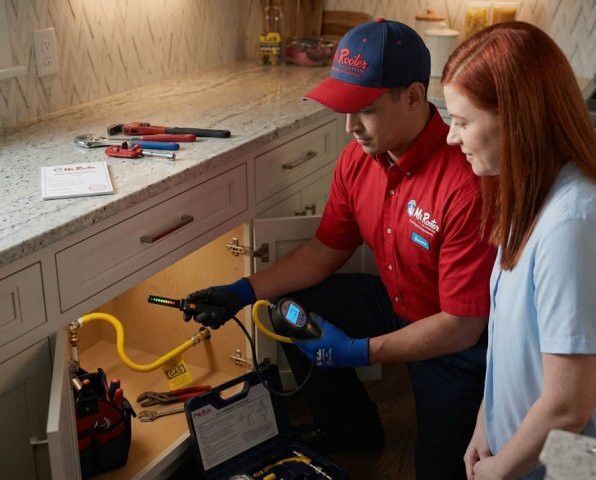
An unusual odor inside your home can be concerning and needs to be investigated as quickly as possible. Both a leaking gas line and a blocked sewer line can be a source of strange odors. Sewer odors and natural gas have a distinct rotten egg smell, which makes it difficult to tell the difference. Knowing how to tell if you have a gas leak or a sewer line problem will help you take the appropriate steps and prevent a disaster. In this post, the plumbers at Mr. Rooter Plumbing explain how you can differentiate between sewer gas and a gas leak.
Sewer gas is a mixture of gases produced by decomposing waste in plumbing and drainage systems. The most recognizable characteristic of sewer gas is its strong, foul odor compared to rotten eggs, decaying waste, or musty odors coming from drains.
This smell is usually localized. Homeowners may notice it near sinks, floor drains, toilets, basements, or areas where plumbing traps have dried out.
While sewer gas can be unpleasant and potentially harmful in high concentrations, it is not explosive. However, it can still cause discomfort, including headaches, nausea, and irritation if exposure is prolonged. It’s best to seek help from a dependable plumbing service when you’re dealing with persistent sewer gas in your home. You may be dealing with a serious blockage that needs to be cleared using hydro jetting machines.
Natural gas used in homes is primarily methane and is naturally odorless. Utility companies add a chemical called mercaptan, which gives it a strong sulfur-like smell to help detect leaks.
A gas leak may also present other warning signs beyond smell. You might hear a faint hissing sound near gas lines or appliances. Unlike sewer gas, natural gas leaks pose an immediate fire and explosion risk. This makes it critical to treat any suspected gas leak as an emergency. Do not hesitate to contact an emergency plumbing service provider when you suspect a gas leak in your home. You don’t have time to wait when you are dealing with gas line damage.
One of the main ways to differentiate between the two is the location and behavior of the smell. Sewer gas is usually tied to drains and plumbing fixtures, while natural gas odors may be present near gas appliances, meters, or pipelines.
Another key difference is severity and urgency. Sewer gas issues are unpleasant but localized to plumbing systems. Natural gas leaks can spread quickly and require immediate evacuation and professional response by a gas line repair specialist.
If you suspect sewer gas, you can start by running water in unused drains to restore the trap seal. Cleaning drains and checking for plumbing issues may also help. However, persistent odors should be inspected by a licensed plumber. A broken or clogged drain line could be the culprit behind persistent sewer gas permeating into your home. You need the intervention of an expert who will address the root cause.
If you suspect a gas leak, leave the home and call a professional plumber specializing in gas line repair. Do not use electrical switches, appliances, or open flames.
Mr. Rooter Plumbing is the company to call when you need gas line repair or sewer repair service. If you’ve noticed a strange odor inside your home or suspect gas line damage, do not hesitate to call us for help. Our plumbers respond quickly and come to your location with everything they need to resolve your problem the same day. Let us help you restore your sewer line and gas line into good working order.
An unusual odor inside your home can be concerning and needs to be…
Read More
Jun 11, 2026

As a property owner, the last thing you want is a flooded basement. Besides making…
Read More
Jun 05, 2026

Are you frustrated with how your water temperature fluctuates when undertaking normal household tasks like…
Read More
May 26, 2026
When dealing with sewer systems, property owners are often concerned about the longevity and durability…
Read More
May 23, 2026
Schedule Emergency Plumbing Repair Services
